
Monkey Mind Meet Spaciousness
On the noisy stories we spin — and the gentle ways we come back to ourselves

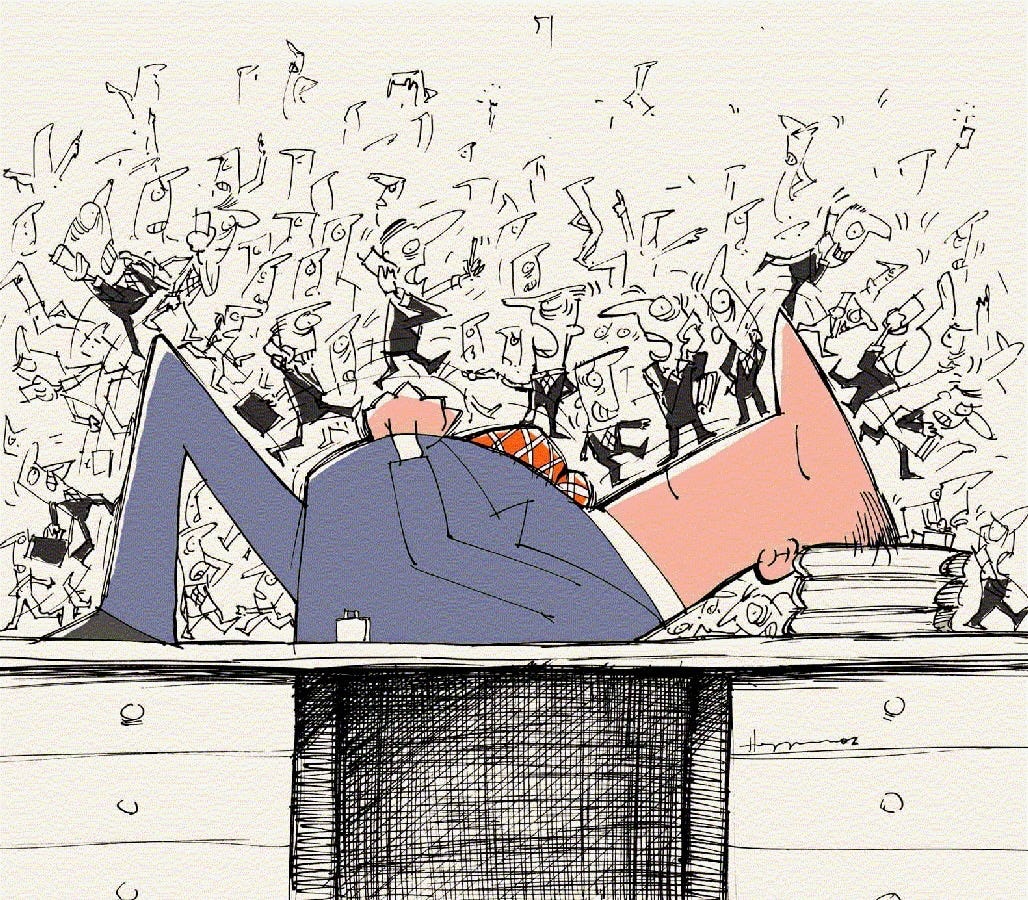
The Mental Channel We Forget We’re Watching
You’re driving somewhere familiar.
You’re folding laundry you’ve folded a hundred times.
You’re lying in the dark, eyes wide open.
And the noise starts.
Not dramatic noise, necessarily. Just the low, relentless kind.
The replay of a conversation that didn’t go the way you wanted. The running tally of what’s undone. The small catastrophe you’ve been rehearsing in case it ever actually happens.
The Buddhist tradition has a name for this: monkey mind. That screechy, grasping, fidgety part of us that cannot — will not — be still.
And most of us have spent years trying to wrestle it into submission.
We meditate. We journal. We breathe through it.
And still, the monkeys chatter.
And chatter.
And chatter.
And chatter.
Can anyone relate?
Here’s what I’ve come to notice from watching my own mind: the struggle itself is part of the problem. When we fight the noise, we give it more room to grow. We become the person arguing with the toddler. Anyone who has tried this knows — the toddler always wins.
What if you didn’t argue at all?
You don’t have to fight the noise — you just change the channel.
Awareness changes everything.
.
One of the simplest practices I’ve learned over the years came from an unexpected place: jury duty. Every time something inadmissible was said in court, the judge would simply cut to the quick:
Strike that.
Not allowed.
Move on.
I remember thinking: Wait a second… why don’t we do this with our thoughts?
Not angrily.
Not forcefully.
Just clearly.
Strike that.
Leave it.
Change the channel.
Because sometimes spaciousness begins the moment we stop arguing with every passing thought and simply choose not to follow it down the rabbit hole.
What if peace is less about controlling the mind…
and more about noticing when you’ve handed it the microphone again?
Ahhh 🐒✨

Continue the Journey
This reflection is part of Journey to a Lighter You — a weekly clearing series rooted in small, steady shifts that unfold over time. It draws from the teachings in my book, A Year to Clear, and brings them into real-time, lived practice.
If you’re new here, welcome — you’re stepping into an ongoing journey where nothing has been missed and every moment is a new beginning.

This week, we’re exploring the surprisingly human art of noticing the stories we spin — and loosening our grip on them.
The deeper journey lives just beyond the paywall, where simple practices and steady reflection help us cultivate spaciousness — inside and out.
Join us.
The Mind Doesn't Need Defeating — It Needs a Redirect

The remote has been in your hand all along.
This week, our clearing focus is simple: you don’t have to fight the noise — you just change the channel.
Monkey mind isn’t a flaw. It’s a feature — an ancient survival mechanism that scans for threats, rehearses outcomes, and keeps us on high alert. The problem isn’t that it exists.
The problem is that we forget we’re the ones holding the remote.
What we resist, we amplify. The instruction don’t think about that almost always produces the opposite effect. This is why brute force doesn’t work on a busy mind. Suppression is just another form of engagement.
What works, quietly and consistently, is redirection. A short phrase — Strike that. Leave it. Not allowed. — acts as a pattern interrupt. It signals to the nervous system: we’re not going there right now. Not because the thought is forbidden, but because we’re choosing a different channel.
This works in the body first, then the mind. Notice the shoulders. The breath. The place where the tightness lives. The phrase isn’t just for the thought — it’s for the whole physiological loop that the thought sets in motion…
You don’t have to fight the noise — you just change the channel.
The channel-change doesn’t have to be dramatic. It doesn’t require silence or stillness or some elevated meditative state…